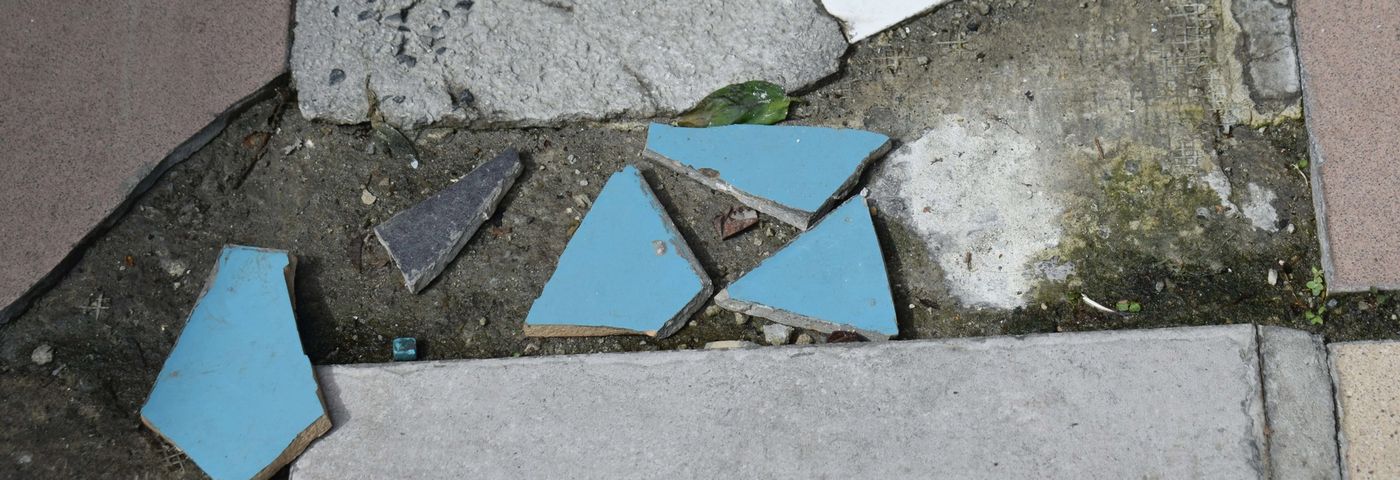
Repair your tiles when the damage is limited to a few tiles or to the grout, and the surface underneath is sound. Replace them when many tiles are cracked or hollow, when there is water behind the tiles, or when the floor itself has moved. A simple test for the first group is to tap the tile: a solid sound means it is well bonded, and a hollow sound means the bond has failed.
Below is how to tell the two situations apart, why tiles fail in Dubai homes, and what to do about matching tiles that are no longer made.
Why do tiles crack or come loose in Dubai?
Almost every failed tile traces back to one of a few causes. Poor adhesive coverage is the most common, where the tile was set with gaps underneath so it is unsupported. Heat and movement come next: floors and walls expand and contract, and without proper movement joints the stress ends up cracking tiles. Heavy impacts such as a dropped appliance chip or crack a tile. Settlement of the slab can crack lines across several tiles at once. And water getting behind the tile, especially in bathrooms, kitchens and balconies, weakens the adhesive until the tile lifts.
Knowing the cause matters, because replacing a tile without fixing the cause means the new tile fails too.
When is repair enough?
Repair is the right choice when the problem is local and the base is solid. That usually means a single cracked tile, a chipped corner or edge, grout that is cracked, stained or missing, or one or two tiles that sound hollow with no sign of water or movement around them.
Regrouting is often overlooked. Old grout lets water in, discolours and crumbles, and replacing it can make a tired floor or shower look new again without touching the tiles.
How do you check for hollow tiles?
Tap the tile gently with a coin or the handle of a screwdriver, moving across the floor. A solid, short sound means the tile is bonded. A dull, drum-like or hollow sound means there is a gap underneath. One hollow tile is a small repair. A whole area of hollow tiles means the installation has a bigger problem.
When should you replace the tiles instead?
Replacement is the better route when the problem is wide or the cause is still active. Warning signs include many hollow or loose tiles in one area, cracks that run across several tiles in a line, which points to movement below, damp, mould or a musty smell behind bathroom or kitchen tiles, an uneven surface where tile edges stand proud of each other, and repairs that keep failing in the same place.
In wet areas, tiles that keep lifting usually mean the waterproofing has failed. Re-tiling over a failed membrane without redoing the waterproofing only delays the next leak, so ask whoever quotes the job whether they will check and redo it.
What if you cannot match the tile?
This is the problem people worry about most. Tiles are made in batches, and colour and shade can differ between one batch and the next. A tile discontinued years ago may be impossible to find.
There are a few ways round it. Keep spare tiles from your original installation if you can, because this is the best insurance. Check showrooms and suppliers for stock of the same or a very close range. Take good tiles from a hidden area, such as under built-in cabinets or inside a closet, and use them where the damage is visible. If nothing matches, a deliberate contrast, such as a border or a feature strip, can look better than a patch that almost matches.
How does a tile repair work?
A careful repair follows the same steps each time. The technician first protects the surrounding area and removes the damaged tile without disturbing the ones next to it. The base is then cleaned and checked, and any moisture or movement problem is identified. The new tile is set in fresh adhesive, levelled with its neighbours, and left to cure. Finally, the joints are grouted and, for natural stone, sealed. Follow the adhesive and grout manufacturer's cure times before putting heavy traffic or water on the area.
What affects the cost of a tile repair?
The price depends on the number of tiles, the type of tile (ceramic, porcelain, marble or vinyl), how easy the tile is to remove and replace, whether the base or waterproofing also needs work, and access to the room. A quick fix on one tile and a bathroom floor that needs the membrane redone are very different jobs, which is why a site assessment gives a more reliable quote than a phone estimate.
Quick answers
Can a single cracked tile be replaced without redoing the whole floor?
Yes. With the right tools, a technician can remove one tile and set a new one without disturbing the rest, provided you can get a matching tile.
Is regrouting worth it?
Often, yes. If the tiles are sound and the grout is the problem, regrouting is the quickest way to improve appearance and keep water out of the joints.
Why do new tiles sometimes sound hollow?
Usually because the adhesive did not cover the back of the tile fully. It is a fault of installation, not of the tile, and a hollow tile can crack under load or let water in.
Do you repair marble and natural stone?
Yes, we repair and replace tiles in marble and other natural stone as well as ceramic, porcelain and vinyl. Stone needs extra care with cutting, matching and sealing.
Get your tiles looked at
If you are not sure whether your tiles can be repaired, we can assess the floor, tell you what is wrong and quote for the right fix, not the biggest one. See our tile repair service in Dubai, our wider tiling and flooring services, or our guide to bathroom tiling if the problem is in a wet room. When you are ready, request a free quote.